
Uncover the performance pitfalls of REST in scaled .NET 9 systems and get practical gRPC migration strategies to slash latency by 80 % and reduce costs.
Reveal how REST hampers .NET 9 microservices with latency and overhead issues, and master gRPC for 80 % speed gains via HTTP/2 and Protocol Buffers. Features .NET 9 code walkthroughs, real benchmarks, and migration tactics for high-performance architectures.
You’ve probably leaned on REST for most .NET APIs you’ve crafted — it’s simple, human-readable, and reliable for starter projects.
But as your microservices network ramps up with relentless internal communications, REST turns into a silent saboteur — spiking latency, swelling data transfers, and fostering fragile integrations that make troubleshooting a relic hunt.
In today’s .NET 9 landscape, where cloud-native speed is non-negotiable, this article demonstrates how embracing gRPC — with its HTTP/2 multiplexing and Protocol Buffers — can trim response times by 80 %, cut bandwidth usage by 90 %, and lock in robust contracts.
You’ll see real benchmarks, .NET 9-ready code, and practical migration paths that fit your existing setup.
The Hidden Cost of REST in .NET Microservices
REST still powers millions of .NET APIs, but inside service meshes it wastes bandwidth, CPU, and developer time.
Bloated JSON Payloads
Readable ≠ efficient.
- REST payload: 2.5 KB JSON
- gRPC payload: 0.3 KB ProtoBuf
- Deserialization: ≈ 85 % faster
HTTP/1.1 Connection Overhead
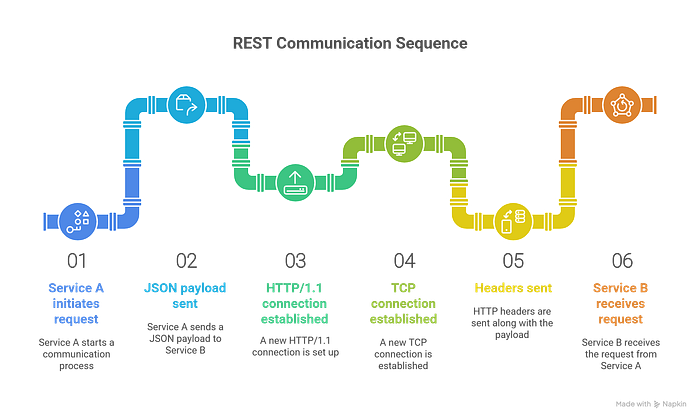
Each REST request = new TCP/TLS handshake.
Under heavy internal traffic, that handshake storm throttles performance.
Contract Drift and Fragility
Loose DTO schemas = runtime bugs..proto files give compile-time contracts and auto-generated clients for consistency.
What Makes gRPC Different — and Faster (in .NET 9)
.NET 9 tightens gRPC integration with better docs, first-class HTTP/2 support, and simplified configuration in Program.cs.
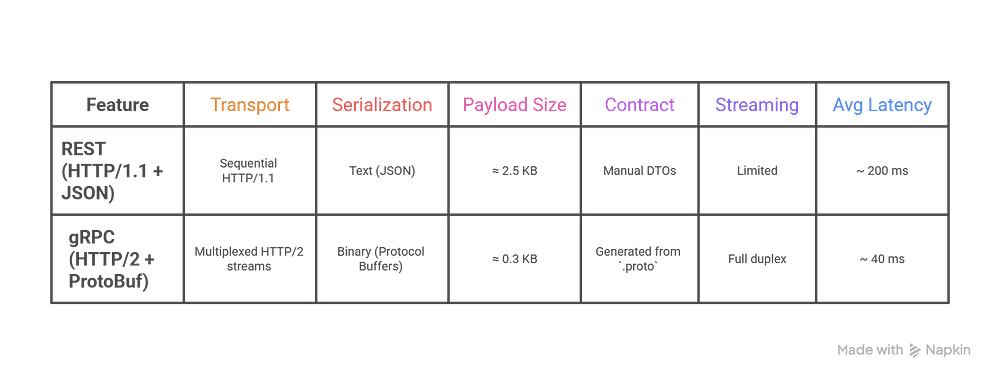
💡 Key takeaway: REST is human-friendly; gRPC is system-friendly. Use each where it fits.
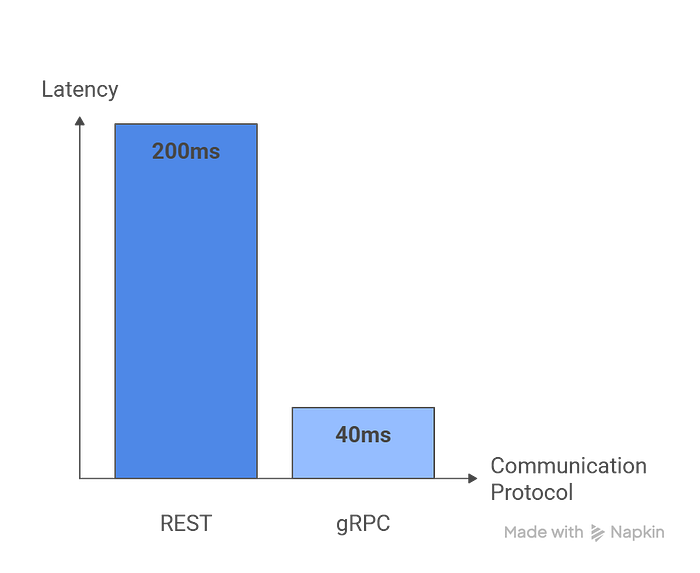
📈 Benchmark Snapshot
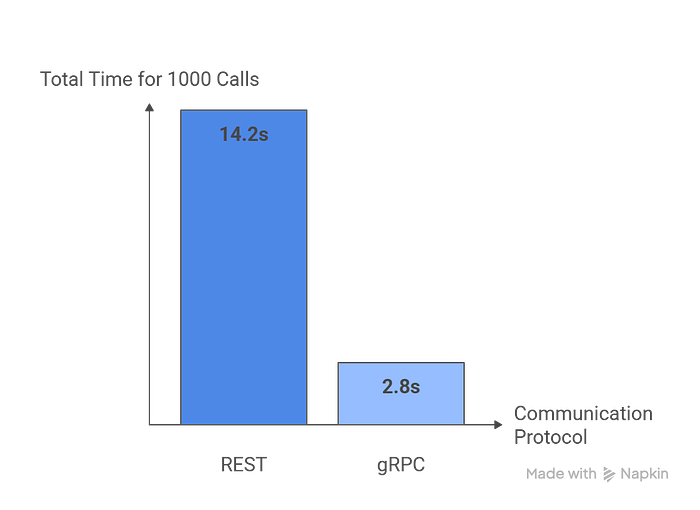
👏 Clap if gRPC’s 90 % payload reduction just sparked your next .NET refactor!
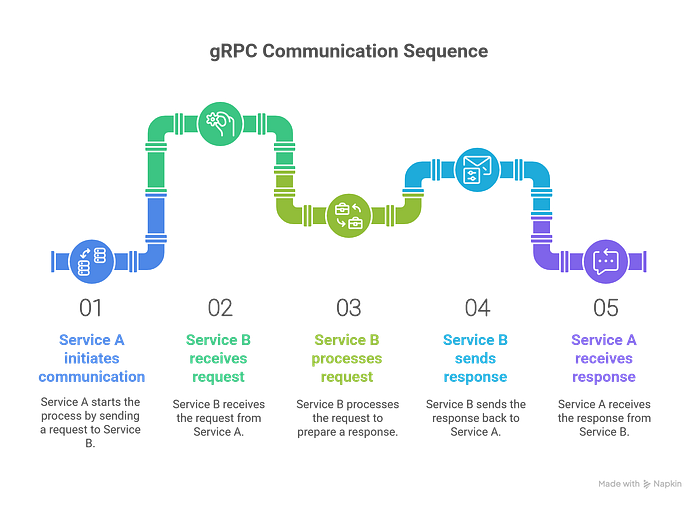
🧠 Visualizing the Difference
REST (Each Call = New Connection)
gRPC (One Persistent Stream)
The Business Case for gRPC Adoption

Lower Infrastructure Costs
Smaller payloads = less egress = lower cloud bills.
Example: Bandwidth dropped from $1,200 to $180/month after migration.
(Add a pie chart visualizing cost distribution before/after.)
Contract Enforcement
Compile-time schemas prevent runtime chaos.
Faster Delivery & Maintenance
Teams deploy independently with confidence.
Easier Observability
Typed messages integrate cleanly with App.Metrics and OpenTelemetry.
Implementing gRPC in .NET 9
(Insert a UML class diagram image mapping .proto → C# classes → client.)
Step 1 — Define Your Contract
syntax = "proto3";
option csharp_namespace = "UserService.Protos";

service User {
  rpc GetUser (UserRequest) returns (UserReply);
}
message UserRequest { string id = 1; }
message UserReply { string id = 1; string name = 2; string email = 3; }
Step 2 — Generate Code
<ItemGroup>
  <Protobuf Include="Protos\user.proto" GrpcServices="Server" />
</ItemGroup>
Step 3 — Implement the Server
public class UserServiceImpl : User.UserBase
{
  public override Task<UserReply> GetUser(UserRequest req, ServerCallContext ctx)
    => Task.FromResult(new UserReply {
      Id = req.Id,
      Name = "Hossein Kohzadi",
      Email = "hossein@example.com"
    });
}
Step 4 — Configure the Pipeline
app.MapGrpcService<UserServiceImpl>();
app.MapGet("/", () => "Use a gRPC client to communicate.");
Step 5 — Consume from Another Service
using var channel = GrpcChannel.ForAddress("https://localhost:5001");
var client = new User.UserClient(channel);
var reply = await client.GetUserAsync(new UserRequest { Id = "42" });
Console.WriteLine($"{reply.Name} ({reply.Email})");
⏱ Result: ≈ 40 ms vs 200 ms for REST under the same load.
Migration Strategies That Work
- Parallel Contracts — run REST and gRPC side-by-side.
- Gateway First — add YARP + gRPC-Web for browser support.
- Internal-First Rollout — start with high-traffic APIs.
- Versioned Schemas — maintain multiple
.protoversions.
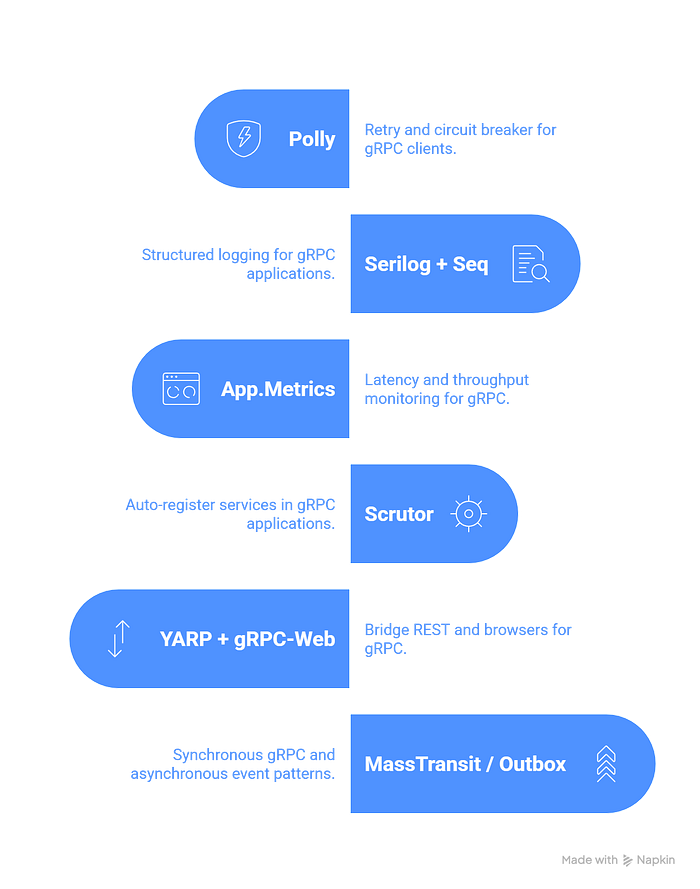
Tooling You’ll Actually Use
Hybrid Architecture — REST + gRPC + Events
- REST → external APIs
- gRPC → internal calls
- Events → asynchronous domain notifications
🧠 Read next: Why Your .NET Services Should Publish Events, Not HTTP Calls
Conclusion: Rethink Before You Rebuild
REST served its purpose, but in a .NET 9 world of distributed systems, its overhead hurts scalability.
gRPC with HTTP/2 multiplexing and Protocol Buffers C# delivers ~90 % smaller payloads, ~80 % faster responses, and schema-safe contracts.
Keep REST for public APIs — but let gRPC handle your service mesh.
Start small, measure, iterate, and watch your architecture breathe again.
What’s your top gRPC win in .NET projects so far — crushing latency, taming costs, or bullet-proofing contracts?
👇 Drop your story in the comments!